





Why Business Operations Become Less Efficient as Companies Grow
Growth gives a company more customers, more people, more tools, and more opportunities, but it also creates more places where work can slow down. When workflows evolve without deliberate design, teams can become increasingly busy while the organization itself becomes less efficient. Improving operational efficiency begins with understanding how work actually moves through the business, where it waits, where information gets lost, and which parts of the process no longer make sense.

Business Website Development: What Companies Actually Need Beyond a Landing Page
A business website does not have to become a large software project. For many startups and service companies, what matters is having a fast, professional website that explains the business clearly, gives potential customers a reason to make contact, and connects that interaction with the tools the company already uses.

QA Audit: What It Is, How It Works and When You Need One
A software QA audit is a structured, evidence-based assessment of how effectively a team manages software quality. It examines testing processes, requirements, coverage, defect management, documentation, release practices, ownership, and quality risks to identify where the current QA system is working and where it is failing.
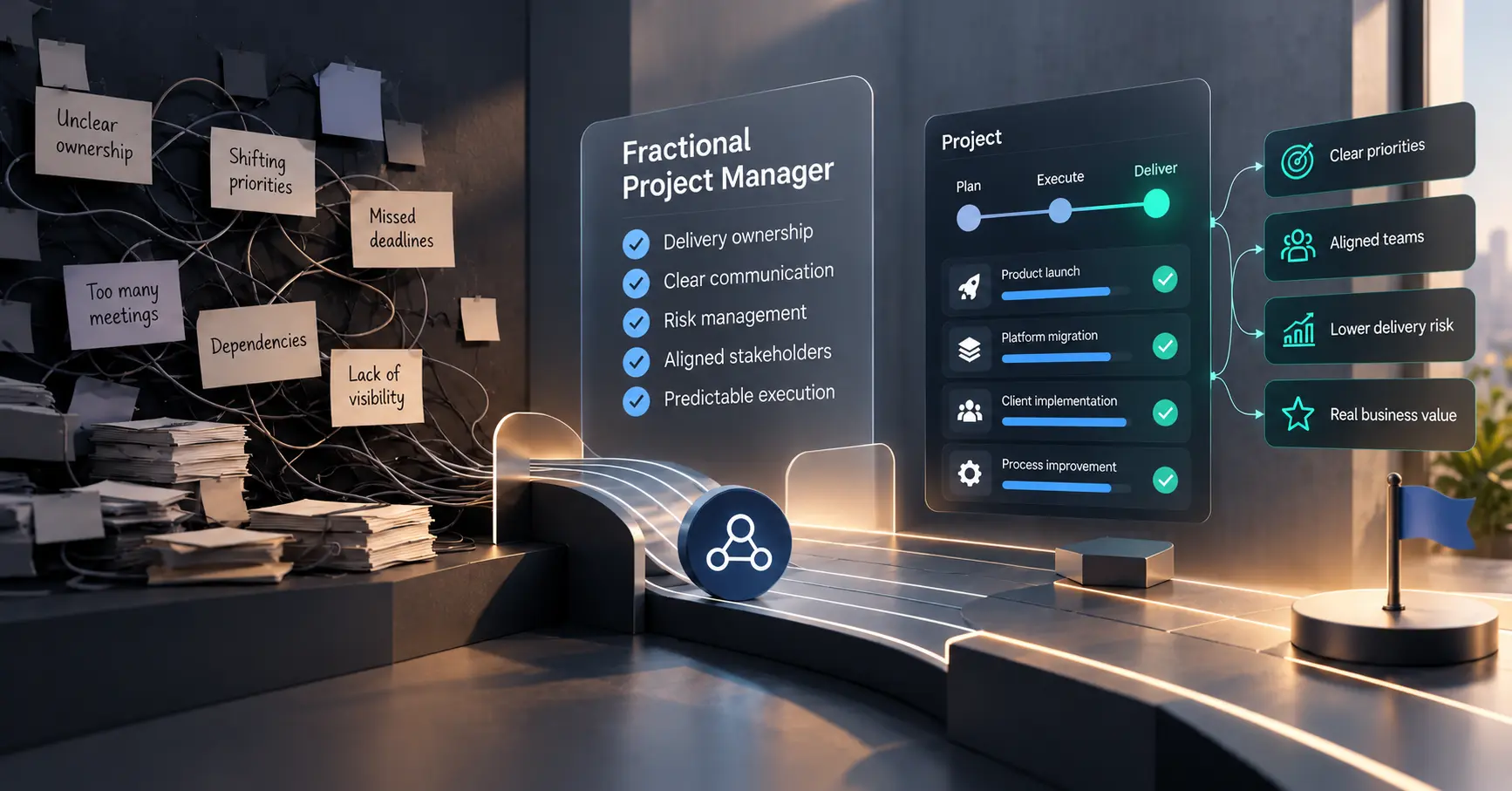
Fractional Project Manager: What It Is, What They Do and When You Need One
A fractional project manager gives a company experienced project and delivery leadership without requiring a full-time hire. The model can be particularly effective for growing technology companies that have real delivery complexity, multiple stakeholders and increasing coordination needs, but do not yet need permanent project management capacity.

What Is a Discovery Call in IT Consulting and What Should You Expect?
An IT consulting discovery call is an initial structured conversation used to understand how a company operates, where problems are occurring, what those problems affect, and whether external expertise can help. Instead of starting with a predefined service or solution, the conversation establishes context, identifies constraints and risks, and determines what should be investigated or improved next.

Fractional QA: How to Build Software Quality Without a Full-Time QA Team
Fractional QA gives SaaS companies and technology startups access to experienced quality assurance specialists and strategic QA leadership without the commitment of full-time hiring. As development teams grow and release cycles accelerate, this flexible approach helps organizations establish reliable testing processes, identify quality risks, and maintain confidence in their software while keeping resources aligned with actual business needs.